Absorb history and tradition with the experts, experiencing the
Land of the Rising Sun's authentic ceremonies and dazzling cities
by iconic bullet train
Explore Japan from top to toe on an epic overland expedition
from Hokkaido in the north to Kyushu in the south.
Experience all Japan has to offer, while journeying on
ultramodern bullet trains. Compare Sapporo's scenic setting to
Tokyo's neon-lit streets, and discover this captivating country's
history through its tranquil temples, a visit to a folk museum, and
at Hiroshima's Peace Memorial.
Take part in cultural experiences, including a tea ceremony in
Kyoto, learning the importance of miso to Japanese cuisine and
witnessing Hakodate fish market in the morning.
Unforgettable Experiences
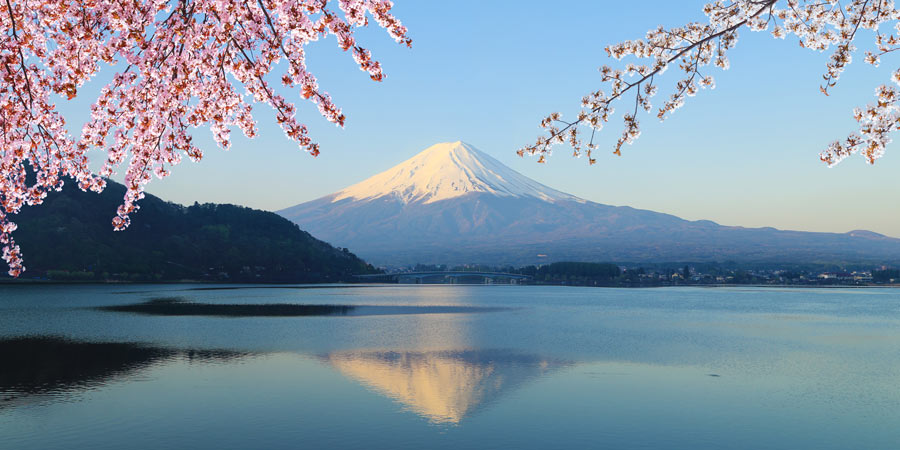
Soaking up the majesty of Japan’s sacred mountain
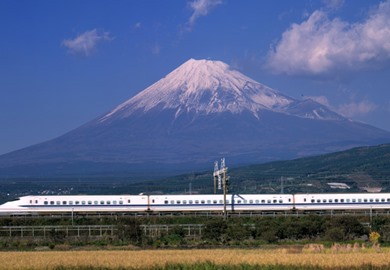
Iconic Mount Fuji is the country’s national emblem, and we view the active volcano from the Hakone cable car and during a cruise along Lake Ashi before visiting a popular sightseeing spot on its slopes.
Participating in an authentic tea ceremony in Kyoto
Experience "old Japan" in the nation’s historic capital during a tea ceremony in Gion, a beautiful area of traditional architecture, famed as the former geisha district.
Discovering Tokyo’s blend of old and modern
Embrace the world’s largest city, where tradition lives in harmony with modernity, while embarking on a tour of Tokyo that features the famous Shibuya crossing, tranquil temples and ornate gardens.
Traveling on the world-famous Shinkansen bullet trains
Riding at speeds of up to 186 mph, experience the nation’s efficient and ultra-modern railways on four high-speed journeys through Japan’s mountainous landscapes.
Uncovering the charms of Hokkaido, Japan’s northern island
Get a feel for the culture of Hokkaido while exploring Sapporo and the trading port of Otaru, viewing the historic warehouses lining the 19th-century canal and uncovering local craftsmanship at the Otaru Music Box Museum.
What’s included on the tour?
Tour Manager
Expertise of a Tour Manager from start to finish
Accommodation
13 nights’ 4 & 5-Star hotel accommodation
Transportation
Standard Class rail travel on local rail networks
All rail, cruise, ferry and coach travel throughout your tour
Food & Drink
Breakfast each day, 4 dinners
Luggage
Group luggage transfers between all hotels
Excursions & Entertainment
All guided tours and excursions
Not Included
Cancellation & Travel Insurance is not included in the price of the tour but can be arranged
Flights and Airport transfers not included
Itinerary
Arriving in Sapporo
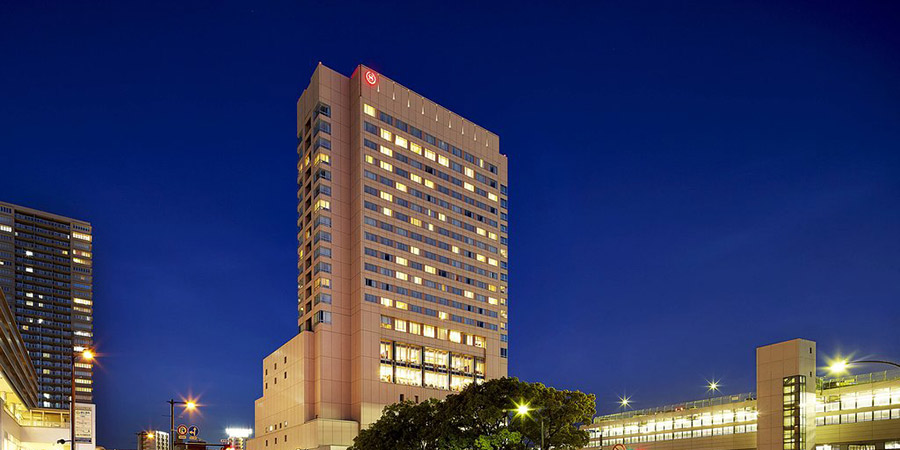
Your Japanese adventure begins today in Sapporo. This city is
the mountainous capital of Hokkaido, the northernmost of Japan's
main islands, and as you arrive, make your own way to our central
hotel.
Making up more than a fifth of Japan's landmass, Hokkaido is a
nature-lover's paradise that accounts for just 5% of its
population. More than a third of those people live in Sapporo, a
dynamic destination with a thriving food scene, attractive parks
and lively streets illuminated by neon signs. While Sapporo is a
modern city, in 1857, it was home to just seven people. It became
well known in the West after hosting the winter Olympics in 1972,
and today, tourists head to Sapporo for its food, beer and
mountainous surroundings.
Our hotel is near the university's Botanic Gardens and the Japan
Railways Tower Observatory. After checking in, we gather for a
welcome meeting to discuss the events to come and a welcome drink
before heading out for our first dinner together at a local
restaurant. Overnight Sapporo.
Includes
Dinner
The historic port city of Otaru
After breakfast at our hotel this morning, we're introduced to
Hokkaido's history in nearby Otaru with our English-speaking guide,
who accompanies us throughout the vacation. This small port city
has a wonderfully preserved canal area lined with warehouses dating
to the late 19th century, when Otaru was the island's financial
center. As an important hub for trade with Russia and China, the
architecture blends Japanese and Western styles, leading to views
that seem familiar to the Western eye yet charmingly
off-kilter.
We also explore the beautiful Old Aoyama Villa, one of the
best-preserved mansions on Hokkaido. As well as an ornate wooden
façade and tiled roof, it is also famed for its artworks and
displays of traditional calligraphy. Later, at the Otaru Music Box
Museum, we view some of the thousands of intricately designed music
boxes of all shapes and sizes.
Returning to Sapporo, there is a free evening to explore and
dine independently. Hokkaido is famed for its seafood and ramen,
while its local beer is popular worldwide. Overnight Sapporo.
Includes
Breakfast
Around Uchiura Bay by rail to Hakodate
Leaving Sapporo after breakfast, the Hokuto limited express
train takes us to Hakodate. As the route heads to Hokkaido's
eastern shores, we skirt around Uchiura Bay and admire the coastal
scenes before arriving in Hakodate.
One of Hokkaido's main cities, Hakodate was the first Japanese
port open to foreign trade and is watched over by the imposing
Mount Hakodate. This afternoon, a sightseeing tour by coach
introduces the city's main sights, including Goryokaku. This vast,
star-shaped fortress was completed in 1866 based on a design by a
French architect. We explore foreign influence in the Motomachi
district, a former residential area for traders, home to a Russian
Orthodox church, the old British Consulate and a Chinese Memorial
Hall. This evening, we ascend Mount Hakodate by a ropeway cable car
to admire views across the city and coast before having dinner at a
local beer hall, dining on Western food in a convivial setting.
Overnight Hakodate.
Please Note - For departures April 26 and May 3 we will stay
at the Hotel & Spa Century Marina Hakodate.
Includes
Breakfast, Dinner
To Tokyo aboard the futuristic Bullet train
An early morning visit to the Hakodate fish market follows
breakfast at our hotel. Specializing in seafood, the market has
stalls displaying fresh crab, squid and oysters, with many
delicacies available to buy and eat on the spot.
Later, we head to Hakodate train station for our first
experience of Japan's world-famous bullet trains. In a little over
four hours, the Shinkansen carries us 513 miles to the nation's
capital. Traveling beneath the Tsugaru Strait, we emerge on Honshu,
Japan's main island, and continue toward Tokyo, arriving
mid-afternoon. With a population similar to that of Canada in an
area roughly the same size as Connecticut, urban Tokyo is the
world's most populous city. However, it regularly finds itself
amongst the top-ranking cities for livability due to its
organization and cleanliness.
Our four-star hotel is in lively Shinjuku, where you have a free
evening to explore at leisure. Japan's most well-known dishes are
available in this vibrant district, so you could find yourself
eating fresh sushi or embracing local culture at a yakiniku
barbecue. Overnight Tokyo.
Includes
Breakfast
Uncovering the charm of Tokyo on a guided tour
With our English-speaking guide, we embark on a coach tour of
Tokyo after breakfast, witnessing the city's contrasts. Starting at
Harajuku's Meiji-Jingu shine, we admire its fantastic Shinto design
dating from its construction in 1920 to honour modern Japan's first
emperor.
As if to demonstrate the intertwining of the tranquil and
bustling, we travel a short distance to the famed Shibuya crossing,
where up to 3,000 people at a time inundate the crossing from all
directions. A symbol of the city, the Senso-Ji temple in Asakusa is
our next destination. Dating from the 7th century, it was built to
honour Kannon, the Buddhist goddess of mercy. With its sweeping,
tiled roof, intricately carved wood and giant red lanterns,
Senso-Ji is the epitome of Japanese Buddhist architecture.
Our tour ends in Asakusa, and with the rest of the day free, you
can return to the hotel by coach or begin exploring independently.
This evening, you may like to seek out some Japanese cuisine, with
Tokyo renowned for its sushi, ramen and tempura. Overnight
Tokyo.
Includes
Breakfast
A journey to lakeside Hakone in Mount Fuji’s shadow
Breakfast is at our hotel before we set out on a trip on Japan's
famous railways. Walking to Shinjuku Station - the world's busiest
- we board the Shonan Express to Odawara. On arrival, we transfer
into the mountains, where an incredible ride on the Hakone Ropeway
takes us on a 20-minute cable car journey that could reveal views
of Mount Fuji in the distance.
As we travel above this area of outstanding natural wonders, we
can view rising plumes of steam from the sulfurous hot springs that
dot Mount Hakone, a volcano that last erupted in 1170. Arriving on
the shores of Lake Ashi, our trip concludes with a boat cruise
across the crater lake to our hotel. En route, look for the
striking red of Shinto torii gates along the shoreline.
Our hotel overlooks this beautiful lake, framed by overlapping
mountains dipping toward the tranquil water. There is time to relax
before dinner at the hotel's restaurant this evening. Overnight
Hakone.
Includes
Breakfast, Dinner
Mount Fuji views and on to Matsumoto
Today is all about Japan's most revered peak, Mount Fuji - the
UNESCO-listed active volcano. Instantly recognizable from artwork,
including woodcut prints by Hokusai, the country's sacred symbol is
astonishing due to its symmetry and prominence.
After breakfast at our lakeside hotel, we set out by coach to
explore the area surrounding Mount Fuji, visiting the World
Heritage Center to learn more about Japan's national emblem and
absorb incredible vistas from its observation deck. Mount Fuji is
one of nature's greatest masterpieces, and seeing it in person is
truly astonishing, with its snow-capped peak rising above a
landscape of forests and lakes.
From here, we travel across the mountains to the alpine city of
Matsumoto. Here, we visit Matsumoto Castle, a five-story
pagoda-style fortress known as "Crow Castle" for its unusual black
exterior. Built in 1504, this is the oldest remaining castle of its
kind in Japan. Afterward, there is time in the popular Nakamachi
District, known for its traditional shops and handicrafts. We then
continue to our hotel, where the evening is at leisure. Overnight
Matsumoto.
Includes
Breakfast
Matsumoto miso factory and a scenic drive to Kanazawa
With our guide, we enjoy a tour of a miso factory to discover
why this paste - a mixture of fermented soy beans with salt and
other umami-based ingredients - is so important in Japanese
cooking.
Continuing along the renowned Mitsuboshi Kaidou Road, we visit
Takayama Jinya, a 17th-century wood-framed government building with
tatami-walled rooms. A stop at the preserved village of Shirakawa
reveals Japan in all its rustic glory. Famed for its traditional
gassho-zukuri houses, we view these charming, thatched homes with
high-pitched roofs similar to Swiss chalets, but distinctively
Japanese.
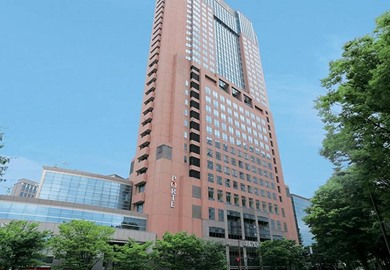
Afterward, we arrive in Kanazawa, a city looking over the Sea of
Japan. Rich in culture and history, Kanazawa is famed for its
geisha districts and samurai heritage. After checking into our
hotel, you have a free evening to get to know our new surroundings
or dine independently in a local restaurant. Overnight
Kanazawa.
Please Note - For departures March 22 & 29 we will stay
at the ANA Crown Plaza Hotel Kanazawa.
Includes
Breakfast
Colorful gardens and samurai history in Kanazawa
After breakfast, we stroll among one of Japan's most cherished
gardens, Kenrokuen. The spacious grounds were constructed by the
Maeda family over two centuries. Admire displays of cherry, maple
and pine trees alongside landscaped ponds and waterfalls. A visit
to the Nomura House, a former samurai residence, follows.
Beautifully painted screen doors, cypress detailing and authentic
samurai armor are on display in this 400-year-old historic
house.
We have free time over lunch to wander the stalls or dine in a
restaurant at Omicho Market, the largest in Kanazawa since the Edo
Period. After, we board the Shinkansen bullet train to Tsuruga,
where we change to a regional train for the final leg of our
journey to Kyoto.
Japan's former capital is a living museum of the country's
artistic heritage, with an impressive 17 UNESCO-listed sites. After
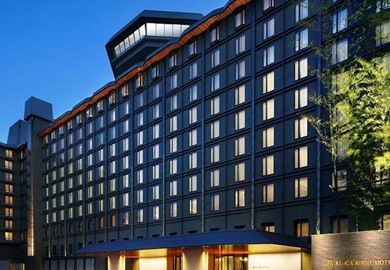
checking into our hotel, your evening is free to dine
independently. Japan is famed for its cuisine, and you might like
to find a restaurant serving fresh sushi, ramen noodles, yakiniku
barbecue or wagyu beef. Overnight Kyoto.
Includes
Breakfast
Uncovering the traditions of Kyoto
A historic city overflowing with the authentic beauty of old
Japan, Kyoto awaits our exploration after breakfast. Our guide
helps us uncover its history and traditions, first visiting
Kinkakuji Temple. The "Golden Pavilion" temple dates to 1397 and
shimmers in brilliant gold leaf on the edge of a reflecting pond,
surrounded by lush forest. Afterward, we participate in a zen tea
ceremony. Learning how to brew, serve and sip this celebrated drink
also gives us a glimpse into the spirituality and culture of
Japan.
Following free time to find lunch independently in the Nishiki
Market, we continue to the Kyoto Railway Museum, where we learn
about the history of Japanese railways and its iconic locomotives.
Our tour concludes amongst the beautiful backstreets of the Gion
neighborhood. Lined by traditional dark-wood homes, this district
was historically home to kimono-wearing geishas, and we enjoy a
performance at the Gion Corner Theatre.
The evening is free to continue wandering the lantern-lit
streets and dine independently. Kyoto has many excellent
restaurants serving refined and traditional cuisine. Overnight
Kyoto.
Please Note - For departures March 22 & 29 and April 5
& 12 we will stay at the Hotel Granvia Kyoto.
Includes
Breakfast
The serenity and wildlife of ancient Nara
Between 710 and 784 A.D., Nara was Japan's capital before Kyoto
adopted the mantle. This is a beautiful and compact city that oozes
history, backdropped by wooded hills.
Arriving by coach this morning, a guided walking tour first
takes us to Todaji Temple to view one of the world's largest bronze
statues. The Great Buddha, or "Daibutsu," was installed in 752 A.D.
and is set within an ornate temple recorded as the largest wooden
building in the world. Nearby, the landscaped grounds of Nara's
deer park are full of serene ponds and tame deer. These beautiful
animals were once revered as messengers of the gods and now roam
freely. They are so used to human visitors that they often bow in
greeting. Leaving Nara, we travel to Osaka by coach before boarding
the bullet train to Hiroshima.
Hiroshima is an emotive city known for the devastation it
suffered during World War II. However, today, its parks and museums
stand as embodiments of peace. After checking into our hotel, there
is a free evening to dine independently. Overnight Hiroshima.
Includes
Breakfast
Exploring Hiroshima and Miyajima Island
This morning, we embark on a tour of Hiroshima's most moving
locations with our English-speaking guide.
Now a welcoming city, Hiroshima became a byword for the horrors
of war after an atomic bomb was dropped by the U.S. Air Force on
August 6, 1945. The Peace Memorial Park commemorates the victims,
while the Atomic Bomb Dome showcases the remains of the scorched
shell of a building destroyed on that fateful day. In the Peace
Memorial Museum, we view items salvaged from the rubble.
In the afternoon, we travel via train and ferry to Miyajima,
leaving modern life behind to soak up the tranquility of this
secluded destination. We enjoy a walking tour of this island, also
known as Itsukushima (Island of the Gods), which includes a visit
to Itsukushima Shrine and the iconic O-Torii Gate that guards its
entrance. Partially submerged at high tide, this stunning red
structure was built in the 12th century and is an enduring image of
traditional Japan.
We dine on our own this evening upon returning to Hiroshima.
Overnight Hiroshima.
Includes
Breakfast
Into the mountains of Kyushu by bullet train
Leaving Japan's main island today, a bullet train takes us from
Hiroshima to Hakata on the southern island of Kyushu. Covering the
distance of 150 miles in a little over an hour, the train crosses
the Hayatomonoseto Strait, reaching the Hakata ward of Fukuoka by
late morning.
Once here, a guided sightseeing tour takes in the Dazaifu
Tenman-gu Shrine, dedicated to the Shinto god of learning. Said to
have been built over the grave of a 9th-century poet, this shrine
is the latest in a line of shrines that have been here since 905
A.D.; however, the pavilion we see today dates to 1591. On the
grounds of pretty bridges and serene pools stand 6,000 plum trees.
The modern exterior of the nearby Kyushu National Museum contrasts
with the shrine's serenity, with a glass façade reflecting the
surrounding forests and sky. Here, we uncover Japanese culture
through a collection of artifacts and exhibitions.
After checking into our four-star hotel in Fukuoka, we visit a
local restaurant for a drink and a Western-style farewell dinner to
celebrate our vacation. Overnight Fukuoka.
Includes
Breakfast, Dinner
Traveling home
From the verdant surroundings of Hokkaido's cities of Sapporo
and Hakodate to Fukuoka, Japan has revealed an enchanting blend of
peaceful spirituality and frenetic cities. Tranquil mountain towns,
neon-draped streets and iconic sights have been uncovered as we
traveled between destinations, including aboard the famous
Shinkansen bullet trains.
Your grand tour of Japan concludes today, and after breakfast,
you can check out of the hotel and make your own way to the airport
for your flight home. However, if you have time, you could explore
Fukuoka on your own, perhaps wandering through Ohori Park beside
the ruins of Fukuoka's ancient castle.
Departure times vary based on selected rail vacation. This
information will be provided in your final documents. For more
information please speak with your rail specialist.
Mobility information
Due to the nature of our tours, they are generally unsuitable for those with restricted mobility. Please reference our Mobility Ratings Information, and if you’d like to discuss any particular vacation with us in this respect, then please don’t hesitate to call us at 1-877-929-7245.
Shinkansen refers to the dedicated high-speed Japanese rail
network that provides a link to most major cities on the islands
of Hokkaido, Honshu and Kyushu. The name "Shinkansen" is also used
to refer to the trains that run on the network - which are perhaps
better known to Westerners as "Bullet Trains." Renowned for their
punctuality, comfort and safety, the trains are frequent and fast,
regularly running at speeds of up to 186 miles per hour (300
kilometers per hour). The trains offer comfortable reclining seats
and there are usually refreshment trolleys selling snacks and
beverages.
This tour covers a lot of ground in a little time. It is fast paced and not suited for people with limited mobility or stamina. Guides are friendly and smooth the inevitable bumps of travel. I feel that this company prides itself in offering a quality experience.
Collected by Trustpilot
David Witte
Submitted 9/Oct
I would add an open discussion with our guide just to talk about general questions people may have. That could be done at one of the hotels perhaps about 1/2 way through the trip.
from Great Rail Journeys
Hello David@! Thank you for your suggestion regarding an informal discussion with the tour guide, as we understand how valuable this opportunity could be for guests to ask general questions during the trip. We appreciate your feedback and will share your comments with our team for consideration when planning future tours. Thank you again for taking the time to share your thoughts on the Grand Tour of Japan!