
The best towns and cities along the Rhine River
13/05/2024 · By Sam Preece
Explore enchanting towns and cities along the Rhine River with Great Rail Journeys. Read our guide to the best destinations along this iconic river.
Read more
 Classic
Save £100pp on Europe 2026 holidays, when you book by 30th June 2026.
Embark on a voyage of discovery amid half-timbered towns, rolling mountains and gleaming rivers in some of Germany's most picturesque locations.
Explore the medieval villages of Wernigerode, Quedlinburg and Goslar and journey to the peak of the Harz Mountains by historic narrow-gauge railway.
Uncover the idyllic towns of Assmannshausen and St Goar, nestled beside the Rhine. Then, marvel at the natural beauty of the Rhine Gorge on a cruise of the most spectacular section of the river, where the legendary Lorelei Rock still casts its spell.
Unforgettable Experiences


What’s included on the tour?
Itinerary
We meet our Tour Manager and our fellow travellers at London St Pancras where we join the Eurostar to Brussels. Travelling in style in spacious Eurostar Plus we enjoy a light meal at our seats as we glide through northern France and into Belgium. On arrival in Brussels, we change trains and travel in First Class to Cologne, where we spend the night.
Arriving around mid-afternoon, the rest of your day is free to explore the historic city nestled beside the Rhine. Cologne's main attraction is its impressive Gothic cathedral with twin spires piercing the sky. Its historic squares are lined with charming buildings housing restaurants and bars. To enjoy a view of the city's skyline, you could join a riverboat cruise to see the sights from the Rhine River. This evening, we gather for our first dinner together at our central hotel.
Please Note - For departure 26th August we will travel out via Bielefeld, staying at the Steigenberger Bielefelder Hof hotel.
Additional information
Hotels


More information on the different trains that are used on this tour.

The Brocken is the highest peak in the Harz Mountain range located in central Germany. A branch railway line, connecting the Brocken to the Harz Mountains' existing narrow-gauge railway, was proposed in 1869 but it was not until 1899 that the eighty-kilometre track was declared operational.

Step aboard the high-speed international rail service, linking London St Pancras to Paris and Lille in France, Brussels in Belgium and Amsterdam in the Netherlands.

Probably one of Europe's finest high speed trains, the jewel in German Rail's crown is the InterCityExpress or ICE.

Named after the famous British express service, InterCity trains are long-distance services operating in a variety of different countries, such as Germany, Switzerland and Austria. InterCity trains are distinct from Inter City Express (ICE) and EuroCity services in that they operate on domestic routes within country borders.

This quaint railway is arguably the region's best-kept secret. The route ascends into the Harz Mountains through a varied landscape. This metre-gauge railway was dismantled by the Soviets at the end of World War II, but was then subsequently rebuilt as far as Gernrode in the post-war years. With reunification the Selke Valley Railway, or Selketalbahn, was acquired by the Harz Mountain Railways and the line finally extended to Quedlinburg, allowing greater tourist access to this nostalgic journey through dense forests and mountains.
Enhance your holiday
Spending a night in London before your tour can make such a difference to the first day of your holiday - you can arrive in the capital in good time, relaxed and ready to join your Tour Manager the next morning. You may even want to take in a show on the West End or dine in one of London's famous restaurants. Perhaps on your return to London, you would like to break your journey with an overnight stay before continuing home.
We can book a wide range of hotels in central London or, for our holidays beginning with a flight, at Heathrow, Gatwick, or Manchester Airport for the night before or after your holiday. If you require a quote for single occupancy at any of the hotels, please contact us on 01904 734 805.

Buying tickets for UK train services can be a tricky business - there are so many fares to choose from, each with different rules and restrictions. As you are connecting with an international departure, we strongly recommend that you book a fully flexible ticket to ensure that should the departure times for your holiday change, your rail ticket can allow for these changes.
We can book fully-flexible UK rail tickets from your local station to join your holiday whether this be a European holiday from St Pancras or a UK holiday. The prices are competitive and tickets are not restricted to a particular train or time of day, and in most cases offer you a free choice of routes.
For an up to date quote from your local station, please ask one of our Tour Advisors.

Enjoy hassle-free travel with our return door-to-door luggage transfer service from only £199 per bag.
The service includes one 20kg bag per person which will be collected from your home before you depart and will be ready and waiting for you at your first destination hotel. Your bag will also be delivered back to your home address on your return.
If your tour involves an overnight stay enroute, you'll need to travel with an overnight bag as your luggage will be delivered direct to your first destination hotel. The luggage service is not available where you are flying to or from your destination and you will need to take your own luggage with you on the flight.

Reviews
 4.4 / 5 · 133 reviews
Airnes

Submitted 2/Jun
The Harz Mountains and Rhine Gorge is one of the best holidays we’ve ever had. It was so varied. The trips on Eurostar and on the other trains in first class were fabulous. The hotels used were all really good, comfortable rooms, great food and good staff. We were pleased to experience the included trips and also some recommendations for our free time. We were well looked after by Elizabeth, our tour manager, and because of her thoroughly good and in depth notes we were able to have the absolute best time on our holiday. We met some lovely fellow passengers and look forward to going on another Great Rail Journeys holiday in the future.
Collected by Trustpilot
Ann
Submitted 29/May
An excellent experience, enjoyed every moment. Varied scenary and incredibably gorgeous places to visit. Tour Manager was knowledgeable and inclusive and a great group to travel with.
Collected by Trustpilot
Leonard Stevens
Submitted 27/May
This was an excellent holiday. Rail journeys, hotels, food etc were all very good. Our guide John Grundy was excellent. Full of useful information and kept us well organised in all ways. Very good itinery.
Collected by Trustpilot
Mr David Hall
Submitted 27/May
Everything went without a hitch and we had an excellent Tour Manager.
Collected by Trustpilot
V Goh
Submitted 14/May
Great itinerary. Great tour manager!
Collected by Trustpilot
customer
Submitted 8/May
Excellent tour in all respects. Well thought out itinerary, decent hotels, informative tour manger and great value. We had a really interesting time and recommend.
Collected by Trustpilot
13/05/2024 · By Sam Preece
Explore enchanting towns and cities along the Rhine River with Great Rail Journeys. Read our guide to the best destinations along this iconic river.
Read more
08/01/2020 · By Rashmi Guha Ray
Discover Europe one train at a time on our blog. Great Rail Journeys shares insights, tips, and tales. Join the journey and explore Europe by rail.
Read more
06/11/2018 · By Jack Stacey
As part of an ongoing series, our content team share their favourite railway experiences in destinations across the world.
Read more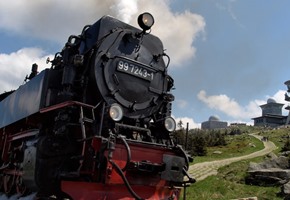
11/08/2014
Explore Germany's trains on a holiday from Great Rail Journeys. From narrow-gauge railways to high-speed locomotives, Germany is a rail-lover's dream.
Read more